If you are looking at a small commercial property in Gwinnett County, the biggest risk is often not the building itself. It is the story behind the site: zoning, access, parking, utilities, and whether your intended use actually fits the property. When you know how to evaluate those pieces early, you can avoid expensive surprises and make a more confident decision. Let’s dive in.
Start With Jurisdiction First
In Gwinnett County, the first question is simple: who controls the property? County rules apply in unincorporated Gwinnett, but properties inside city limits follow that city’s rules. That matters because zoning, permitting, code enforcement, and business licensing can change from one jurisdiction to another.
This is especially important if you are looking at property inside Mulberry. Effective January 1, 2025, the City of Mulberry took over planning, zoning, code enforcement, permitting, and business licensing within its city limits. Before you underwrite any deal, confirm whether the parcel is in unincorporated Gwinnett or inside a city.
Confirm Zoning And Use
Once you know the jurisdiction, the next step is to confirm zoning and whether your intended use is allowed. A property that looks perfect for office, retail, medical, or warehouse use on the surface may still need additional approvals. You want to know whether the current use is permitted, requires a special use permit, or would need rezoning.
In Gwinnett, rezonings, change-in-conditions, buffer reductions, waivers, and variances require mandatory pre-application meetings. That makes zoning review more than a box to check. It is a core part of your timeline, cost, and deal strategy.
If the property has an older building or a long-standing use, do not assume you can continue or expand it without issue. Some sites may involve lawful nonconforming uses, and that status should be verified before you count on future changes. A grandfathered use is not the same thing as unlimited flexibility.
Study The Future Land Use Context
A small commercial property does not operate in isolation. The surrounding area, road network, and future land use plans can all influence value. In Gwinnett, the 2045 Unified Plan and any relevant small area plan can give you useful context for how the area may change over time.
These plans do not rezone property, but they do show how the county views future growth and land use patterns. That can help you assess whether nearby redevelopment, corridor changes, or shifting land uses may support your investment or work against it. For many buyers, this is where a property’s long-term upside becomes clearer.
Use GIS To Understand The Site
Gwinnett’s GIS Data Browser is one of the most practical tools for early due diligence. It can help you locate parcels, roads, addresses, intersections, utilities, schools, and water features. That gives you a broader picture of what surrounds the site and how the parcel functions in the real world.
This matters because map-level issues often affect property value more than buyers expect. A creek, drainage feature, nearby utility line, odd parcel shape, or challenging road layout can change how usable a site really is. Looking at GIS early helps you spot those constraints before they become expensive problems.
Evaluate Access And Driveway Design
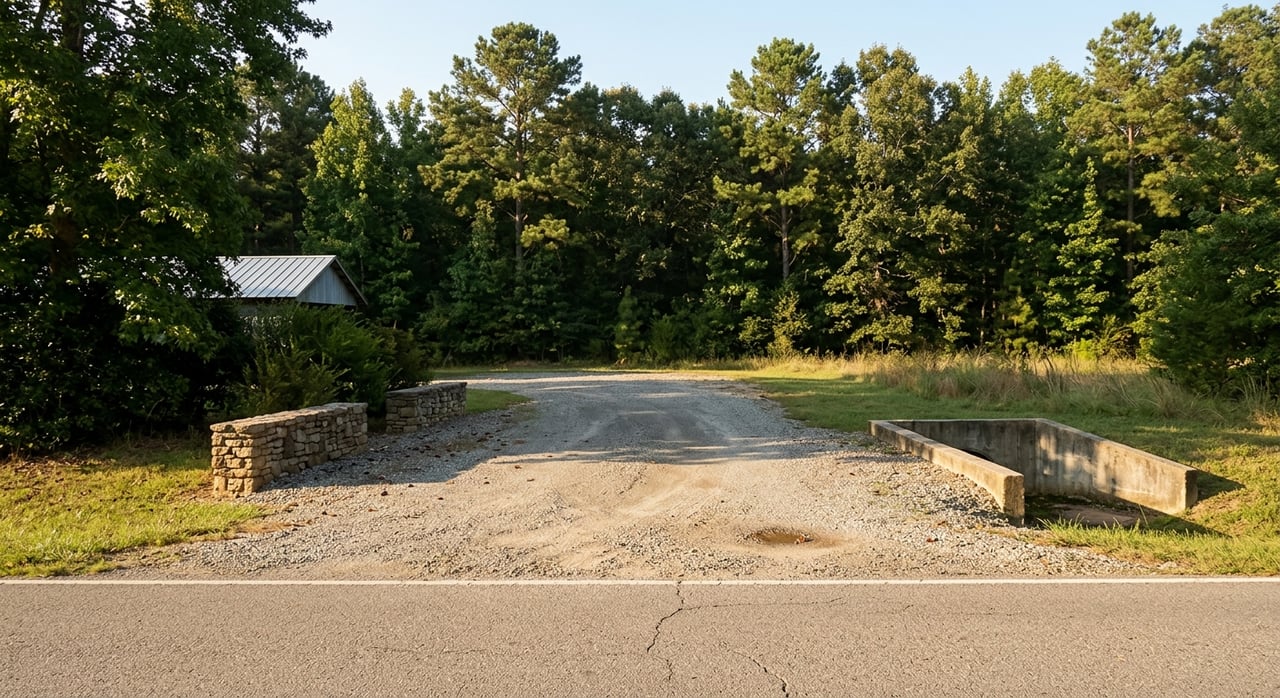
For small commercial property, access can make or break the deal. You may have a good building and decent location, but if customers, employees, or delivery vehicles struggle to get in and out, the site becomes less functional. In Gwinnett, driveway and access standards deserve close attention.
For nonresidential sites, parking on anything other than a paved surface is generally prohibited unless another system is approved by the Director. Driveways serving parking lots with five or more spaces must be paved, and driveways should generally intersect streets at right angles. If the property fronts a state highway, access and driveway design must also meet Georgia DOT standards and permitting requirements.
That means you should not just ask whether the site has an entrance. You should ask whether the entrance configuration, paving, and traffic flow fit your intended business use. This is especially important for properties with higher customer turnover or delivery traffic.
Check Parking Requirements Carefully
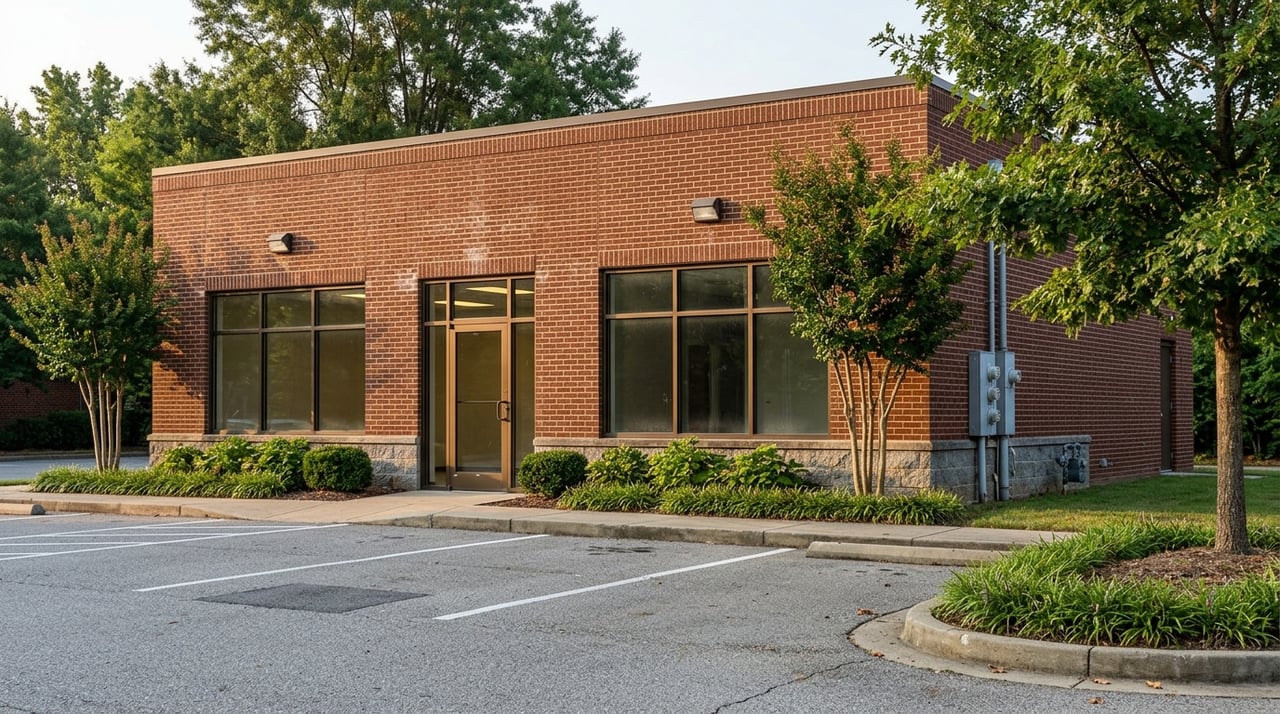
Parking is one of the most common trouble spots in small commercial underwriting. In Gwinnett, required parking ratios vary by use, and those numbers can directly affect whether a property can support your business or a future tenant.
The county’s parking table lists office, business, professional, and office medical uses at a minimum of 1 space per 500 square feet of net rentable area. Retail shopping center or regional mall uses are also listed at 1 per 500 square feet minimum. Warehouse, including office, is listed at 1 per 2,500 square feet minimum.
If you are looking at flex space, be careful. Flex is not a standalone category in the parking table, so buyers should ask Planning to classify the use before assuming a ratio. A bad assumption here can create a major issue after closing.
There may be some flexibility in certain situations. Gwinnett allows off-site parking within 400 feet with a recorded commitment, allows some shared parking, and allows an administrative variance of up to 30 percent in some cases. Still, those options need to be verified before you build them into your plan.
Look Beyond Frontage For Visibility
A property can have road frontage and still struggle with visibility. For retail and office uses in particular, the way a building sits on the site matters. Building orientation, façade exposure, parking placement, and even dumpster placement can affect how visible and inviting the property feels.
County rules also restrict signs in the public right-of-way. In some overlay districts, surface parking cannot sit between the street and the building. So when you evaluate visibility, think beyond a simple drive-by impression and look at how the site actually presents itself to the public.
Consider Loading And Truck Movement
If you are buying flex, warehouse, or service-oriented property, loading and circulation deserve extra attention. A site may technically work on paper but still create daily operational headaches if trucks cannot move safely and efficiently.
Gwinnett requires loading spaces to have direct access to a street or alley with safe and adequate truck ingress and egress. Access ways for delivery and garbage trucks should avoid backing into arterials or collectors. That means you need to think about turning radius, loading position, and how vehicles move through the site, not just whether there is a loading door.
Verify ADA And Lighting Basics
It is easy to focus on zoning and miss basic site functionality. In Gwinnett, off-street parking must comply with ADA standards and Georgia accessibility law. Lighting should also provide visibility and security for entrances, parking, delivery areas, and pedestrian walkways.
These may sound like minor details, but they affect usability, safety, and code compliance. If a site needs re-striping, upgrades, or lighting improvements, that cost should be part of your evaluation from the beginning.
Test Utility Capacity Early
Utilities can be one of the biggest hidden issues in commercial property. A building may appear ready to go, but the site still needs adequate water, sewer, and stormwater support for your intended use. Gwinnett Water Resources provides commercial resources such as water and sewer availability letters, mapping, sewer capacity certification, and fire flow testing contacts.
Existing water and sewer maps are also available through the county’s developer resources. This makes it easier to confirm whether the site has the utility support your business or future tenant will need. If you are considering expansion or redevelopment, this step becomes even more important.
If public sewer is not available, find out whether the property relies on septic. Gwinnett notes that wastewater disposal is typically handled by sanitary sewer or a privately owned septic system, and Environmental Health is part of the process for septic-related questions. For some commercial uses, septic limitations can materially affect what is possible on the site.
Think About Expansion Before You Buy
Many buyers look at small commercial property with plans to add square footage later. That can be smart, but only if the site can support the growth. In Gwinnett, additions of at least 500 square feet can trigger additional parking and loading requirements.
If an expansion exceeds 50 percent of the existing building or use, the whole use may need to meet current parking and loading standards unless a variance is granted. That is a big deal for buyers who assume they can expand an older site without bringing broader improvements into compliance. You want to test that assumption before you make an offer.
Review Code Enforcement Risks
A commercial property can look fine during a showing and still carry compliance issues. In unincorporated Gwinnett, businesses need an occupation tax certificate and a certificate of occupancy before opening to the public. If a seller or occupant is operating without the right approvals, that can create delays or added work for a buyer.
Gwinnett Code Enforcement handles property maintenance, signage, zoning, land use, noise, and business regulations. Common issues include outdoor storage, trash and debris, parking issues, zoning violations, and businesses operating without an occupation tax certificate. A careful review of these basics can help you avoid taking on someone else’s problem.
Watch For Overlays And Special Districts
Some of the most important property rules are not found in the base zoning alone. If a parcel sits in a corridor or redevelopment area, it may also be subject to an overlay or special district. Those rules can materially change what the site requires or allows.
In some Gwinnett overlays, minimum parking is removed, shared parking is encouraged, and surface parking between the street and the building is prohibited. That can be helpful in some cases and limiting in others. Either way, it shows why parcel-specific review matters.
A Practical Gwinnett Checklist
When you evaluate a small commercial property in Gwinnett, it helps to keep a simple checklist in mind:
- Confirm whether the parcel is in unincorporated Gwinnett or inside a city
- Verify zoning and whether your intended use is permitted
- Review the 2045 Unified Plan and any relevant small area plan
- Map the parcel in GIS to understand roads, utilities, and water features
- Check driveway design, frontage, and access points
- Confirm required parking for the exact use classification
- Review loading, truck circulation, ADA access, and lighting
- Verify water, sewer, stormwater, and fire flow support
- Ask whether septic is involved and whether it fits the intended use
- Check whether expansion would trigger parking or loading upgrades
- Review code enforcement exposure and operating requirements
- Look for overlays or special districts that may affect the site
The strongest small commercial opportunities in Gwinnett usually combine clear jurisdiction, a permitted use, safe access, enough paved parking, utility capacity, and a site layout that supports the intended business. When those pieces line up, value becomes much easier to understand.
If you are weighing a commercial purchase in Gwinnett, it helps to have someone who can look beyond the listing sheet and focus on real-world feasibility. Travis Ebbert helps buyers think through zoning, access, utilities, development potential, and the local process so you can move forward with more clarity.
FAQs
What should you check first on a small commercial property in Gwinnett County?
- Start by confirming jurisdiction. Properties in unincorporated Gwinnett follow county rules, while properties inside city limits follow that city’s planning, zoning, permitting, and code rules.
How do you verify a commercial use in Gwinnett County?
- Confirm the parcel’s zoning and ask whether the intended use is permitted, requires a special use permit, or would need rezoning. If changes are needed, Gwinnett requires pre-application meetings for several land use requests.
Why does parking matter when buying commercial property in Gwinnett?
- Parking affects whether the site can legally support your business or tenant. Gwinnett parking requirements vary by use, and the wrong assumption can create a major compliance issue.
Can a small commercial property in Gwinnett rely on septic?
- Some properties may rely on septic instead of public sewer, but you should verify whether the intended commercial use can be approved with that setup. Environmental Health is part of the septic-related review process.
Do overlays affect small commercial properties in Gwinnett County?
- Yes. Overlay or special district rules can change parking, building placement, and site layout requirements, so they should be reviewed alongside the base zoning.
What permits do businesses need before opening in unincorporated Gwinnett?
- In unincorporated Gwinnett, businesses need an occupation tax certificate and a certificate of occupancy before opening to the public.