If you are looking at a small commercial site in Clarke County, it is easy to focus on the building, the asking price, or the traffic you notice during a quick drive-by. But experienced investors usually look deeper. They want to know how a site fits its corridor, what local rules allow, and whether the property can support the kind of tenant demand that actually shows up in Athens-Clarke County. This guide walks you through how that assessment often works so you can make smarter decisions with more confidence. Let’s dive in.
Why corridor location matters
In Clarke County, small commercial sites are often evaluated as part of a larger corridor, not as isolated parcels. Athens-Clarke County planning materials show that commercial uses are mainly planned in areas such as Downtown, Main Street Business, and General Business, especially along corridors like Lexington Highway, Atlanta Highway and Broad Street, Prince Avenue, and Oak and Oconee Street.
That matters because the value of a site often comes from the activity around it. Investors are usually asking whether a parcel sits near recurring trips tied to students, employees, healthcare visits, shopping, or commuting patterns. In a market like Clarke County, access to those daily patterns can shape lease potential just as much as the lot itself.
What drives local demand
A strong site usually needs a strong reason for people to be nearby. Athens-Clarke County’s largest employment sector is Educational Services, followed by Healthcare and Social Assistance. The University of Georgia is listed as the largest employer, with Piedmont Athens Regional Hospital, Clarke County School District, and St. Mary’s Health Care System also standing out as major employers.
Those anchors help investors think about likely tenant demand. Service retail, office, medical, and neighborhood commercial uses may benefit when they are placed near concentrations of jobs and daily activity. The county also reports about 90,000 daily commuter trips in 2021, with higher job concentrations downtown and on the Eastside, which gives investors another clue about where recurring demand may be stronger.
Core site factors investors test
Before an investor gets too far into projections, they usually test the site’s basics. In Clarke County, that often starts with how easily the property can be seen, reached, and used.
Traffic and visibility
Road exposure is one of the first filters. Investors often review traffic counts on public roads using GDOT’s TADA data, then compare that with the property’s visibility from the road. A site on a busy route may look promising, but traffic only helps if drivers can actually see the building or lot clearly enough to notice it.
Frontage and access
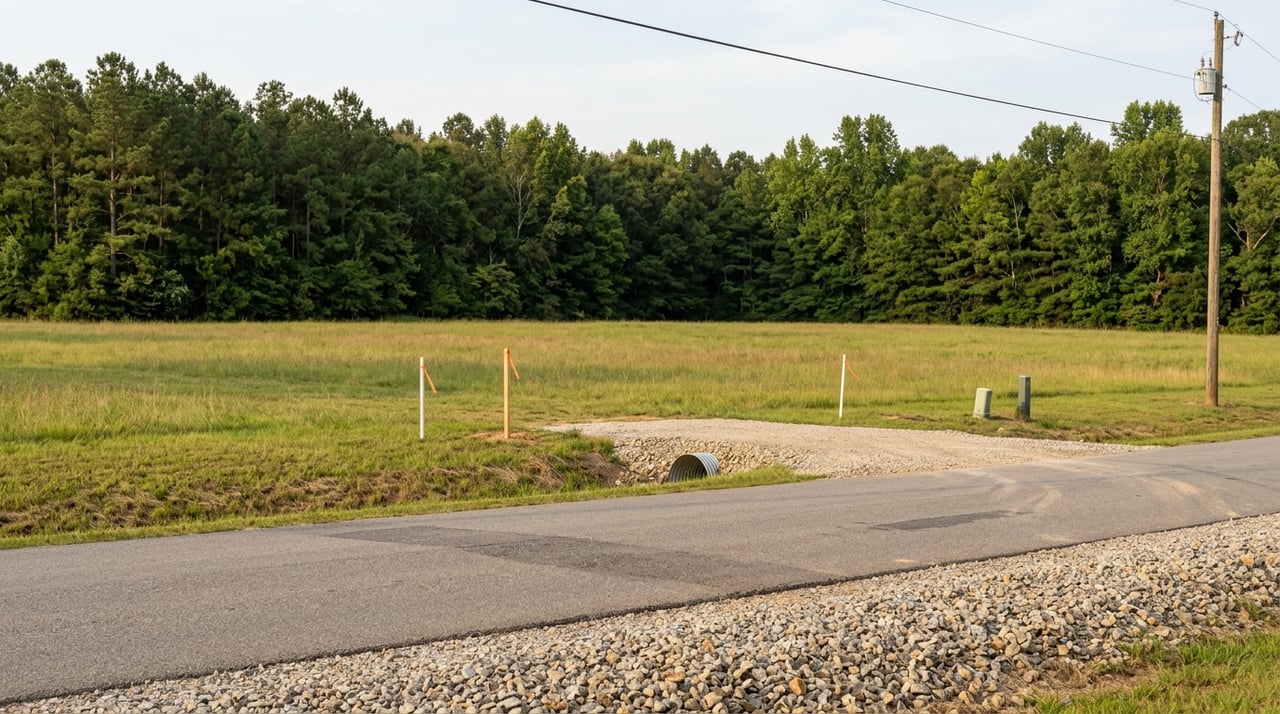
Frontage can influence both marketing appeal and practical function. A property with useful road frontage may offer better exposure and easier entry, but investors also look at whether access points are limited or shared. In Athens-Clarke County site standards, commercial review can require controlled access and cross-easements when property is divided, so the access layout deserves close attention.
Parking and circulation
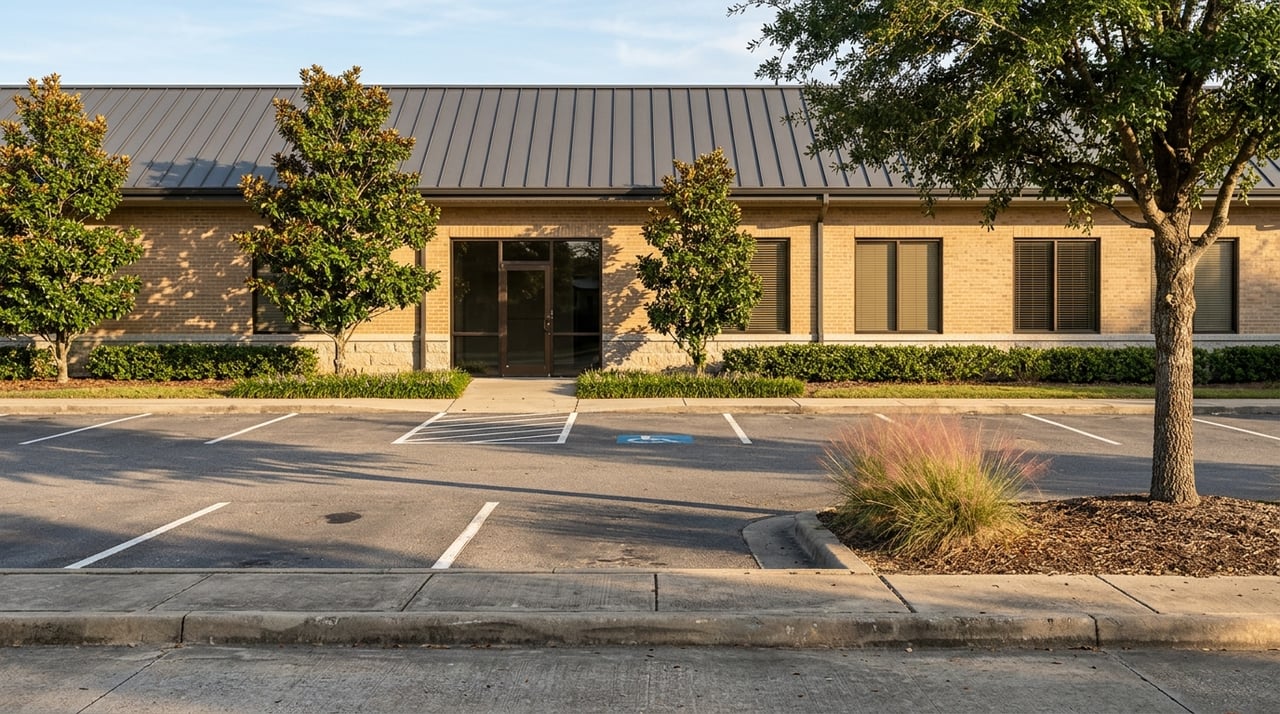
Parking expectations can change a lot by district. In the Commercial Downtown district, most nonresidential and hotel uses are not required to provide off-street parking or loading areas. That is very different from many corridor sites, where private parking, drive aisles, and circulation can heavily affect how a property functions for tenants and customers.
Pedestrian access
Not every commercial site is judged only by car traffic. Athens-Clarke County standards note that buildings next to a street-frontage sidewalk must provide accessible pedestrian access from the street to the building frontage. In areas with stronger foot traffic, that pedestrian connection can matter as much as driveway count.
Downtown and corridor sites work differently
One of the biggest mistakes small investors make is treating every commercial site the same. In Clarke County, downtown properties and corridor properties often need different underwriting assumptions.
Downtown site logic
The county describes downtown as the heart of the business district, one of the major transportation routes through Athens-Clarke County, and the center of the tourist industry. For a small downtown site, investors may focus more on street exposure, walkability, and shared parking patterns than on having a large private lot.
That can make a smaller parcel more useful than it first appears. If the setting supports pedestrian activity and the use fits the district, a downtown property may function well even without the parking layout that would be expected elsewhere.
Corridor site logic
Along corridors such as Atlanta Highway, Lexington Road, Prince Avenue, or Oak and Oconee Street, investors often put more weight on access management, turning movement, private parking, and visibility from traffic lanes. In these settings, the way cars enter, exit, and move through the site may have a direct impact on tenant appeal.
That is why two similarly sized sites can perform very differently. One may have better frontage, easier ingress and egress, or a layout that supports the intended use with fewer changes.
Zoning is only part of the picture
Many buyers start by asking, “What is it zoned?” That is an important question, but it is not the only one that matters in Clarke County.
Athens-Clarke County’s 2023 Comprehensive Plan makes clear that Future Land Use is not the same thing as zoning. Zoning actions are reviewed against the adopted Future Land Use Map, and Future Land Use serves as an aspirational guide that helps shape local zoning decisions.
That means a property’s current zoning label does not tell the whole story. Investors also look at whether the site aligns with broader county planning goals, whether physical design issues may affect usability, and whether a future change or expansion could face added review.
Commercial districts to know
Athens-Clarke County includes commercial districts such as C-G, C-D, C-O, C-N, and C-R. The C-G district is intended to stabilize, improve, and protect areas that provide commercial commodities and services. The C-D district functions differently because most nonresidential and hotel uses are not required to provide off-street parking or loading areas.
For a small site investor, that distinction matters. The district can influence not just what use is possible, but how much site work, parking area, or redesign may be needed before the property can support a tenant.
Overlays and review layers
Some parcels also sit within overlay areas or other special review structures. For example, the Highway 78 and Atlanta Highway special district overlay was created for high-density, regional-scale industrial, manufacturing, commercial, and office development.
Even if you are evaluating a smaller site, that extra layer can matter. The parcel’s corridor, overlay status, and room for future expansion may affect value just as much as the current building or rent roll.
Infrastructure can make or break a site
A commercial property may look attractive on paper but still fall short if the site cannot support the intended use. That is why infrastructure and engineering questions usually come up early in serious due diligence.
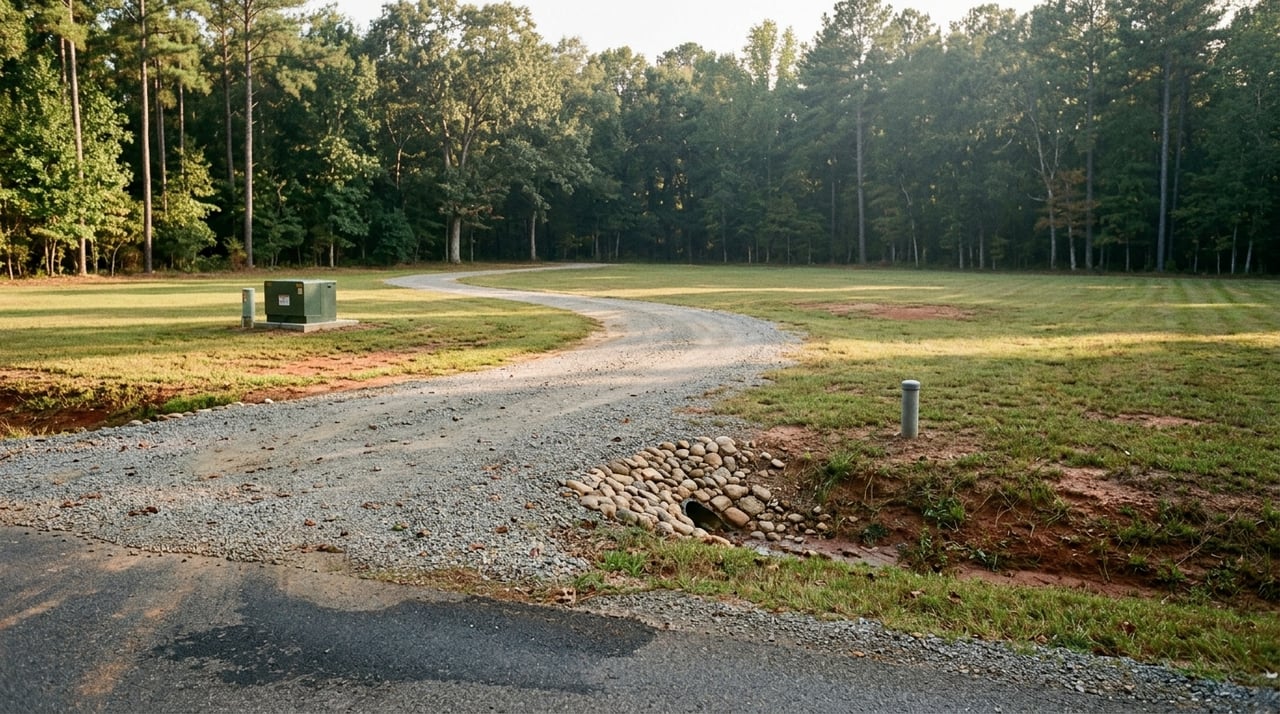
In Athens-Clarke County special-use review, local officials consider whether there is adequate capacity for water, sewer, paved access, electricity, storm drainage, and transportation. For investors, this means utilities are not just background details. They are part of the real value equation.
This is especially important if you are buying with future expansion or redevelopment in mind. A site that works for today’s small user may not work as easily for tomorrow’s larger footprint if service capacity, drainage, or access becomes a constraint.
Lease potential starts with tenant fit
Small commercial investing is often about future lease potential. In Clarke County, that usually means looking at whether the site fits the kinds of businesses supported by local employment and commuting patterns.
The county’s largest sectors include Educational Services, Healthcare and Social Assistance, along with retail, accommodation and food services, and manufacturing. Jobs are spread across the county, with higher concentrations downtown and on the Eastside, and more than 44 percent of workers commute less than 10 miles to work.
Those patterns can support different kinds of small commercial uses depending on location. A site near medical activity may appeal to health-related users. A site near commuter flow may fit convenience-oriented retail or office users better. The key is matching the property to realistic demand instead of forcing a concept that does not fit the corridor.
A practical due diligence checklist
If you are evaluating a small commercial site in Clarke County, a simple framework can help you stay focused on the right questions.
Questions investors often ask
- Which corridor is this property part of?
- Is the site closer to downtown-style foot traffic or corridor-style vehicle traffic?
- What do GDOT traffic counts suggest about exposure?
- How strong are the frontage, visibility, and access points?
- Does the zoning fit the likely use today?
- Does Future Land Use support the long-term direction of the property?
- Are parking and circulation adequate for the intended tenant?
- Are there overlays or added review layers that could affect plans?
- Can the site support water, sewer, electricity, storm drainage, and transportation needs?
- Does the likely tenant type match local job and commuter patterns?
Helpful local resources
Before hiring consultants, investors can often gather useful information through public sources. Athens-Clarke County’s Planning Department manages land use, transportation, zoning, subdivision, GIS, and sign ordinances. ACC Economic Development offers business-growth assistance and resource connections, and GDOT’s TADA tool provides roadway counts and reports.
These tools will not answer every question, but they can help you narrow your focus early. That often saves time and helps you spot issues before they become expensive surprises.
The big takeaway for Clarke County investors
The strongest small commercial sites in Clarke County usually combine several advantages at once. They fit the corridor, offer workable access and parking for the setting, align with zoning and planning direction, and make sense for the tenant types supported by local employment and commuter patterns.
That is why small commercial investing here is rarely just about buying a building at the right price. It is about understanding how location, regulation, infrastructure, and tenant demand come together on one parcel. When you evaluate a site that way, you give yourself a much better chance of buying with clarity instead of guesswork.
If you are weighing a small commercial site in Clarke County and want a practical read on frontage, zoning fit, development potential, or next-step feasibility, Travis Ebbert can help you sort through the details and move forward with confidence.
FAQs
How do investors evaluate a small commercial site in Clarke County?
- Investors often look at corridor location, traffic exposure, visibility, frontage, access, parking, zoning, utilities, and whether the site fits likely tenant demand in the local market.
Why does corridor location matter for Clarke County commercial property?
- Athens-Clarke County planning materials show that commercial uses are concentrated in key districts and major corridors, so investors often judge a site by how it connects to surrounding activity and recurring trips.
What is the difference between downtown and corridor commercial sites in Clarke County?
- Downtown sites may rely more on street exposure, pedestrian access, and shared parking patterns, while corridor sites often depend more on private parking, vehicle access, and visibility from major roads.
Does zoning tell you everything about a commercial site in Clarke County?
- No. Investors also review Future Land Use, overlays, site design factors, and local review requirements because those issues can affect long-term feasibility and expansion potential.
What local factors influence lease potential for a small commercial property in Clarke County?
- Local employment in education, healthcare, retail, food service, manufacturing, and nearby commuter patterns can all shape which tenant uses may be realistic for a site.